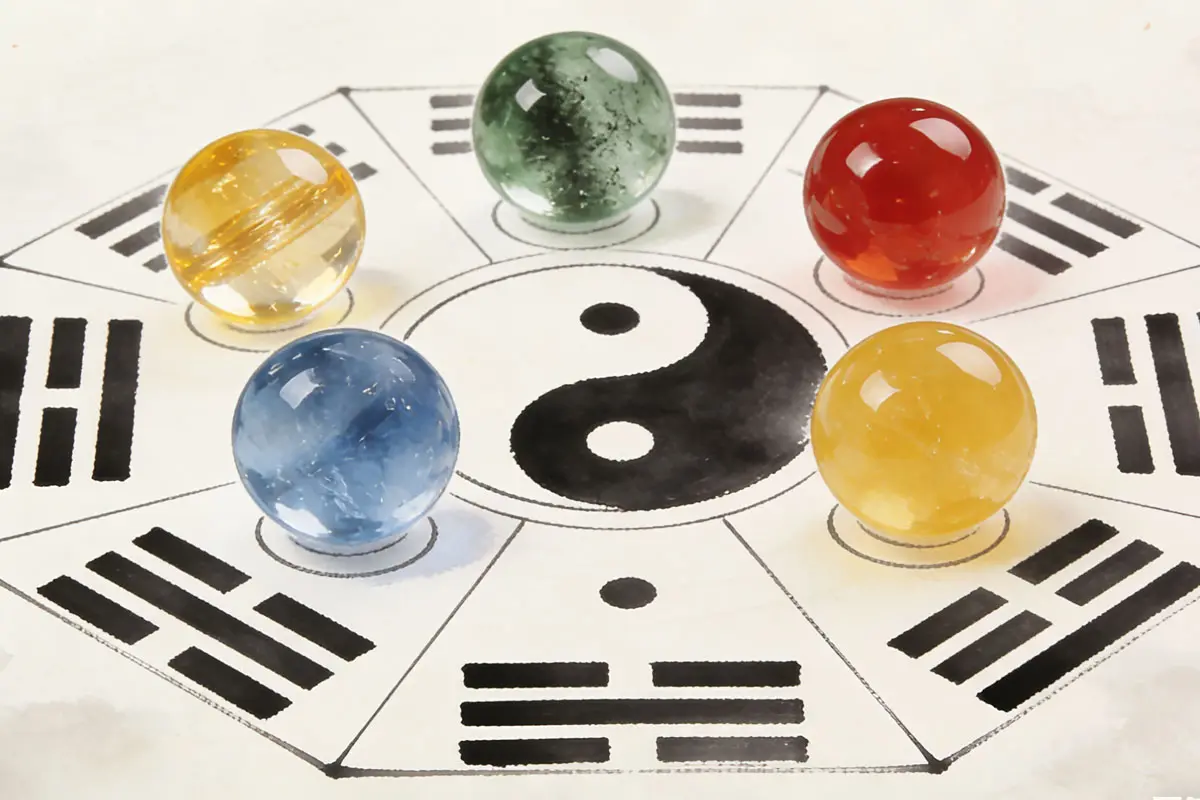
Delve into Five Elements & Crystal Energy in Chinese Culture—in the long history of Chinese culture, the Five Elements Theory is a philosophical system for understanding the interconnectedness of nature and life.Combined with the use of natural crystals, it forms a unique cultural tradition dedicated to seeking harmony and balance.This article explores how the Five Elements (Metal, Wood, Water, Fire, Earth) relate to the energetic properties of crystals and how they can be integrated into modern lifestyles.
The Five Elements: A Framework for Natural and Life Interactions
The theory describes the generating and restraining relationships between five fundamental energies or phases, widely used to interpret natural phenomena, wellness, and personal states:
●Metal: Represents clarity, structure, and order.
●Wood: Symbolizes growth, expansion, and new beginnings.
●Water: Associated with flow, depth, and adaptability.
●Fire: Embodies passion, vitality, and transformation.
●Earth: Signifies stability, nourishment, and central support.
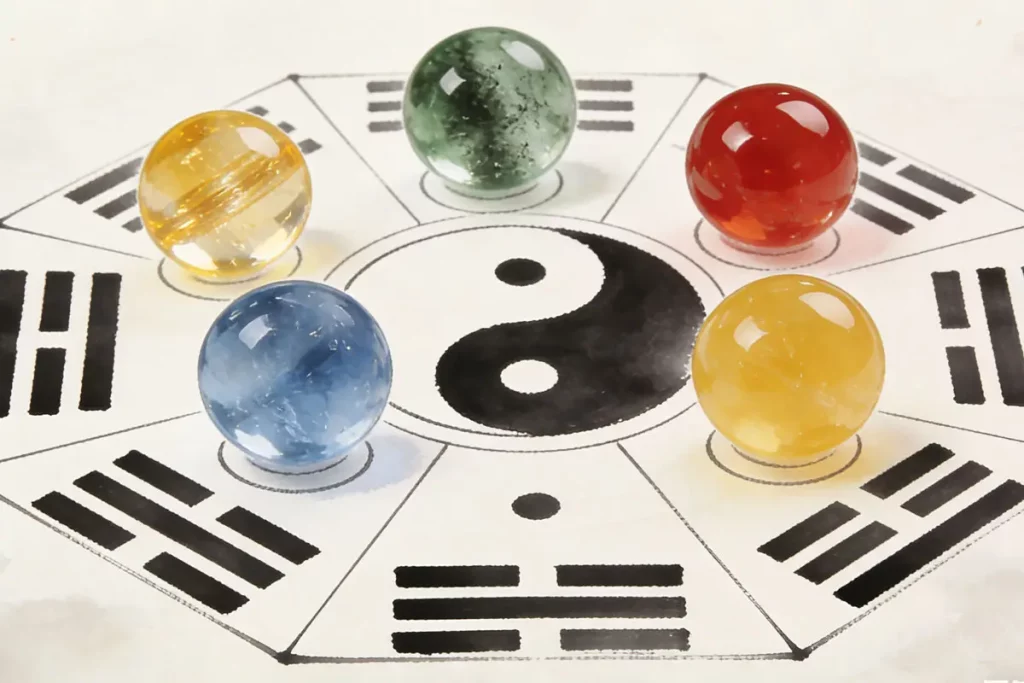
Now we’ll unpack the core of Five Elements & Crystal Energy in Chinese Culture—how specific crystals resonate with the five fundamental energies of Metal, Wood, Water, Fire, and Earth.
Crystals: Natural Resonators of the Elements
In Eastern traditions, certain crystals are believed to resonate with the energy of specific elements and can be used to support one in adjusting their personal space or mindset.
1、Crystals Resonating with “Metal”
Common Choices: Clear Quartz, Pyrite.
Cultural Association: Used to support mental clarity and focus.
2、Crystals Resonating with “Wood”
Common Choices: Green Phantom Quartz, Peridot.
Cultural Association: Connected to personal growth, new beginnings, and nurturing creativity.
3、Crystals Resonating with “Water”
Common Choices: Aquamarine, Black Agate.
Cultural Association: Traditionally used to calm the mind and encourage inner reflection.
4、Crystals Resonating with “Fire”
Common Choices: Red Agate, Orange Moonstone.
Cultural Association: Linked to feelings of vitality, passion, and positive action.
5、Crystals Resonating with “Earth”
Common Choices: Citrine, Tiger’s Eye.
Cultural Association: Helps foster a sense of stability, grounding, and abundance.
Cultural Practices: Integrating Ideas into Life
These traditional concepts can be integrated into daily life in simple ways:
1、Space Arrangement: Place crystals corresponding to specific elements based on direction or room function. For example, place “Metal” element crystals in a study (learning/workspace).
2、Personal Wear: Choose crystal jewelry that corresponds with one’s current intention or the qualities one wishes to cultivate.
3、Mindful Moments: Hold or place crystals during quiet moments as a cultural practice tool to aid concentration or setting intentions.
Modern Perspective: Contemporary Relevance of Traditional Wisdom
Today, the association of the Five Elements with crystals serves as a cultural lens, helping people consciously connect with the natural world. It encourages attention to balance in one’s living environment and acts as a profound symbolic system for personal reflection and self-improvement.
Conclusion
The combination of the Five Elements and crystals reveals the exploration of natural harmony in traditional Chinese culture. It is more like an art of living concerning balance and interconnection, rather than a set of rigid rules. By understanding this cultural perspective, we can introduce deeper layers of meaning and tranquility into our living spaces and personal practices.
At jingyucrystal, we offer crystals with an appreciation for their natural beauty and cultural significance. Explore our curated collections to find pieces that resonate with you and bring a touch of timeless wisdom into your daily life.