
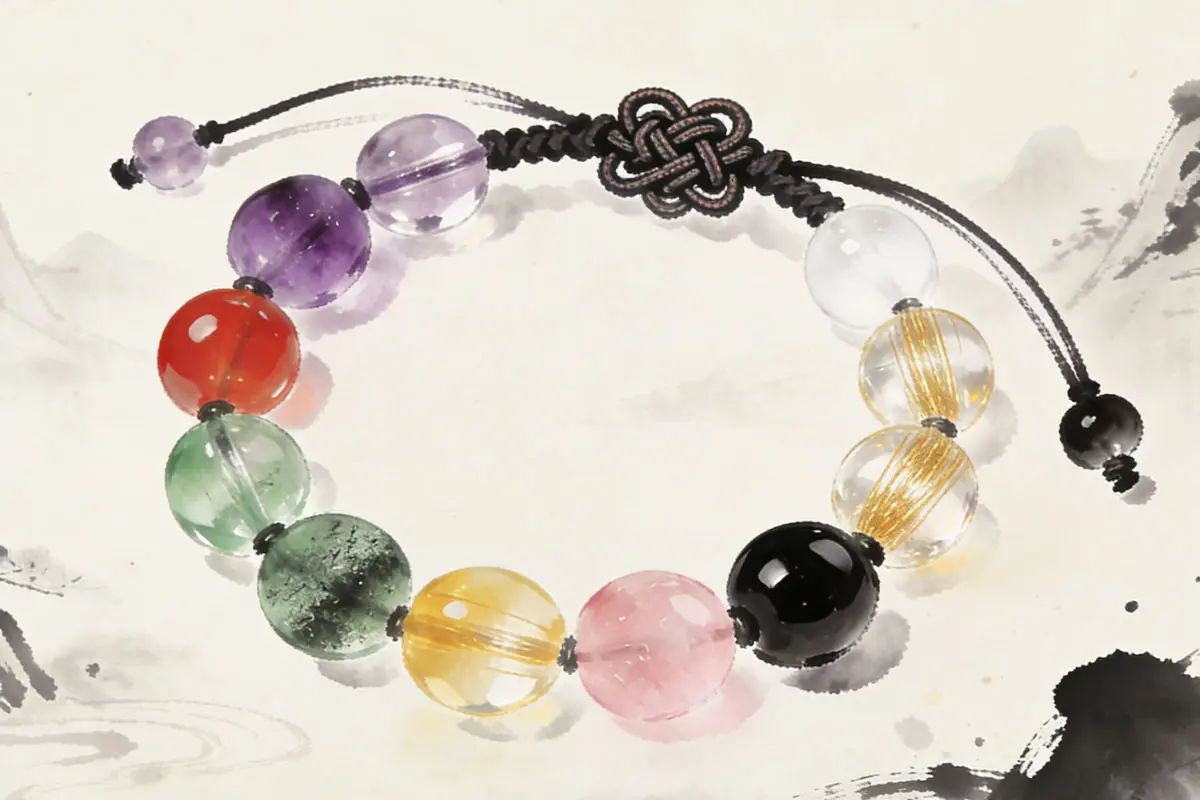
Wondering how to check if my crystal bracelet is real? After buying a crystal bracelet, many people will repeatedly rub it: “Is this string really natural crystal?” After all, glass imitations and synthetic crystals on the market are becoming more and more realistic, making it difficult for ordinary consumers to distinguish at a glance. In fact, the difference between real and fake crystals lies in the details. Without the need for professional instruments, mastering the three key skills of “touching the hand, seeing the luster, and identifying the mark” can easily verify the authenticity of your crystal bracelet, avoiding wasting money.
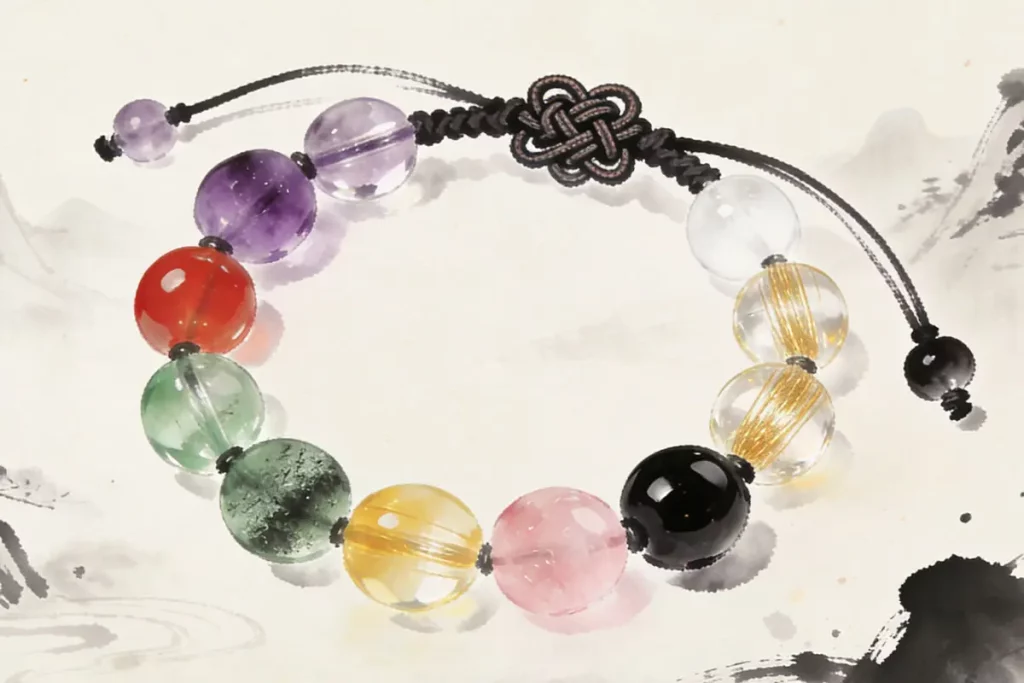
First point: tactile sensation
Hand touch is the most direct method of identification, and the difference in tactile sensation between natural crystals and imitations is very obvious. After receiving the crystal bracelet, first stick it on the inside of the wrist or at the tiger’s mouth: natural crystals will bring a soft cool feeling first, which is not piercing, but rather comfortable like morning dew, and can last for 1-2 minutes. After that, it will gradually conform to body temperature and become warm and moist; However, glass or resin imitations either have a weak cooling sensation, similar to body temperature as soon as they are worn, or a “stiff cooling sensation” like ice cubes, with a particularly fast heating rate, and a rough feeling of sweating after wearing for a long time.
Second point: Look at the luster
Place the crystal bracelet in natural light (avoid direct sunlight) and observe the luster of the crystal. The difference between genuine and fake will be instantly highlighted. The luster of natural crystals is “transparent and layered”, just like sunlight passing through morning mist, it will show subtle changes in luster with the angle of your wrist rotation. For example, amethyst will emit varying shades of purple halo, while pink crystal has a peach like soft luster; The luster of the replica is particularly “rigid”, either a glaring “plastic reflection” or a murky “dull light”, with a surface like a layer of plastic wrap. From any angle, the luster remains unchanged, completely lacking the agility of natural crystals.
Here’s a little trick: You can use a mobile phone flashlight to shine on the crystal. Natural crystals allow light to penetrate evenly, and the luster inside the crystal spreads gently; Imitation products either have poor light penetration, or have no sense of hierarchy when directly exposed to light, and may even have obvious spots and blind spots.
Third point: Distinguishing imprints
Many people think that “flawless” crystals are good, but in fact, this is the “disguise technique” of imitations. During the billions of years of formation, natural crystals naturally leave unique “identity imprints” – such as tiny ice cracks (like small patterns in crystals), cotton fluff (like cloud like flocs), and even tiny mines. These are not flaws, but rather core symbols that distinguish them from imitations; In order to sell well, imitations are often made to be “perfect”, with crystal interiors clean and free of impurities, appearing neat but losing the vitality of natural crystals. For example, if you have a amethyst bracelet, you can observe carefully: the purple distribution of natural amethyst is uneven, there may be natural color band transitions, and there may be small ice cracks hidden inside.
The beauty of natural crystals lies in their warm touch, dynamic luster, and unique imprint. Using these three techniques to “verify” your crystal bracelet can not only avoid being deceived by counterfeit goods, but also better understand the preciousness of natural crystals. If you want to buy reliable natural crystal bracelets, our selection series is worth a look – each one comes with a testing report, allowing you to buy and wear them with peace of mind.